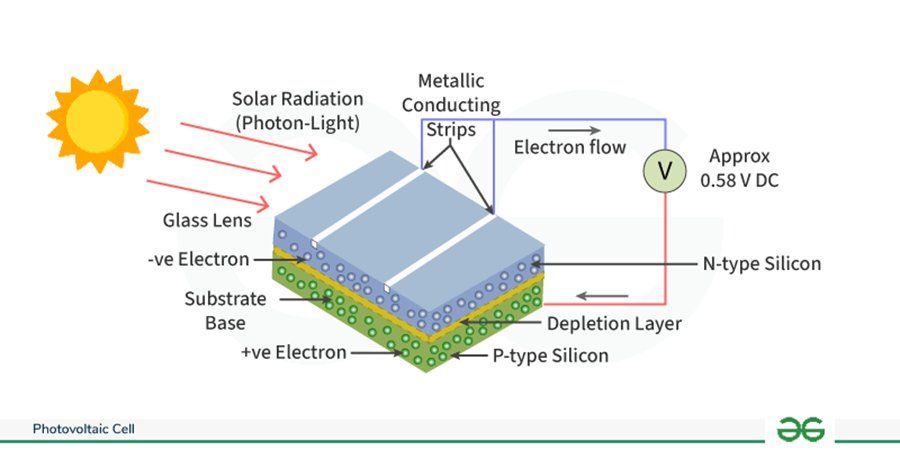
How a photovoltaic cell works.
Aarav’s Breath of Fresh Air
Growing up near a coal power plant, Aarav battled asthma and missed school days as thick smoke filled the air. His village had electricity but at the cost of their health.
Years later, when Aarav returned after studying environmental engineering, he was stunned. Floating solar panels now covered the nearby reservoir, and sleek rooftop PV systems powered homes quietly, cleanly, without a trace of pollution.
“I used to fear the air I breathed,” he said. “Now, solar power lights up our homes without darkening our skies.”
For Aarav and his village, photovoltaic technology didn’t just bring power — it brought healing.
“I’d put my money on the sun and solar energy. What a source of power! I hope we don’t have to wait until oil and coal run out before we tackle that.” — Thomas Edison
Imagine a world without solar panels. In such a world, fossil fuels would dominate, remote villages would remain in darkness, and our fight against climate change would be drastically handicapped. Thankfully, the invention of photovoltaic (PV) cells has opened a new frontier in clean, scalable, and innovative energy.
The Science Behind PV Cells
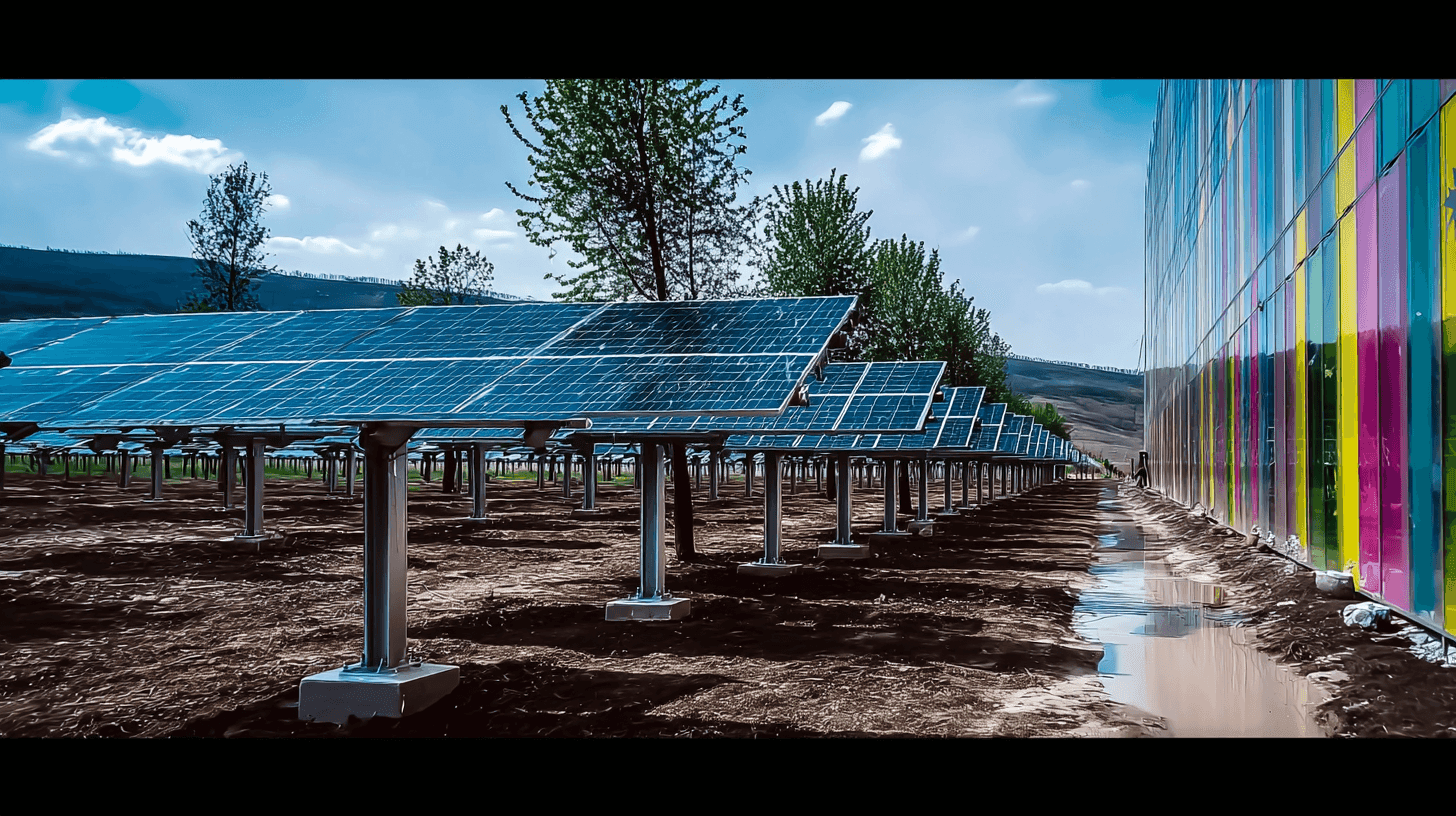
Photovoltaic cells convert sunlight into electricity using semiconductor materials. When photons from sunlight hit the cell, they knock electrons loose, generating an electric current. Innovations like tandem solar cells and bifacial panels have greatly improved efficiency, while integration into windows, rooftops, and even floating platforms is expanding their applicability across sectors.
What If PV Cells Were Never Invented?
Without PV cells, the world would face increased dependence on fossil fuels, accelerated climate change, and limited access to energy especially in remote areas. Technological advancements in green energy, smart grids, and decentralized electrification would lag behind. The absence of solar-powered tools — from vehicles to calculators — would set back innovation in multiple sectors. In essence, the lack of PV technology would compromise global climate goals, making sustainability a distant dream.
Real-World Innovation – Omkareshwar Floating Solar Project
Located on the reservoir of the Omkareshwar Dam in Madhya Pradesh, this floating solar project is among the world’s largest. Developed under Rewa Ultra Mega Solar Ltd (RUMSL), the project includes:
- Tata Power’s 126 MW segment
- SJVN’s 90 MW segment
- Floating inverter platforms and adaptive anchoring systems
- Estimated generation: ~400 GWh/year
- CO₂ offset: 4.3 lakh tonnes annually
- Water saved: 32.5 million m³ per year
The project not only provides clean energy but also preserves land and reduces water evaporation. It stands as a model for balancing innovation, ecology, and scale.
Bhadla Solar Park – Scaling Solar on Land
India’s Bhadla Solar Park in Rajasthan spans 56 square kilometres and generates 2,245 MW of solar energy, making it one of the world’s largest land-based solar parks. With massive financial backing and strategic desert location, Bhadla contributes to reducing greenhouse gas emissions by over 4 million tonnes annually.
Breakthroughs in PV Technology
Recent innovations are making solar power more efficient and flexible:
- Perovskite & Tandem Solar Cells: Higher conversion rates by capturing a wider solar spectrum.
- Bifacial Panels: Capture light from both sides, increasing output.
- Roll-to-Roll Printing & Thin Films: Allow flexible, low-cost mass production.
- Building-Integrated PV (BIPV): Turns rooftops and windows into power-generating units.
- Smart Solar Systems: Use AI to optimize performance and integrate with smart grids.
The Future Shines Bright
“The use of solar energy has not been opened up because the oil industry does not own the sun.” — Ralph Nader, activist
PV cells have transformed from space-age tech into everyday powerhouses driving clean energy access across the globe. From high-tech floating farms to rooftop panels on schools and hospitals, the impact is massive. As we move toward a carbon-neutral future, photovoltaics are not just tools — they are lifelines of equity, innovation, and sustainability.
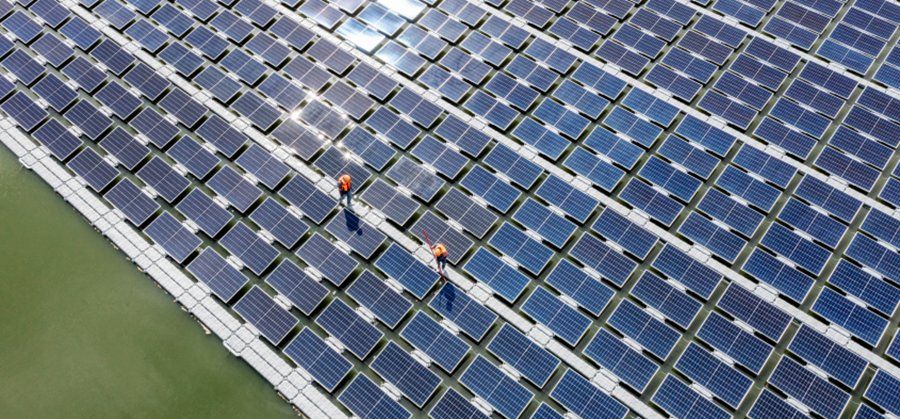
The Omkareshwar Floating Solar Project.
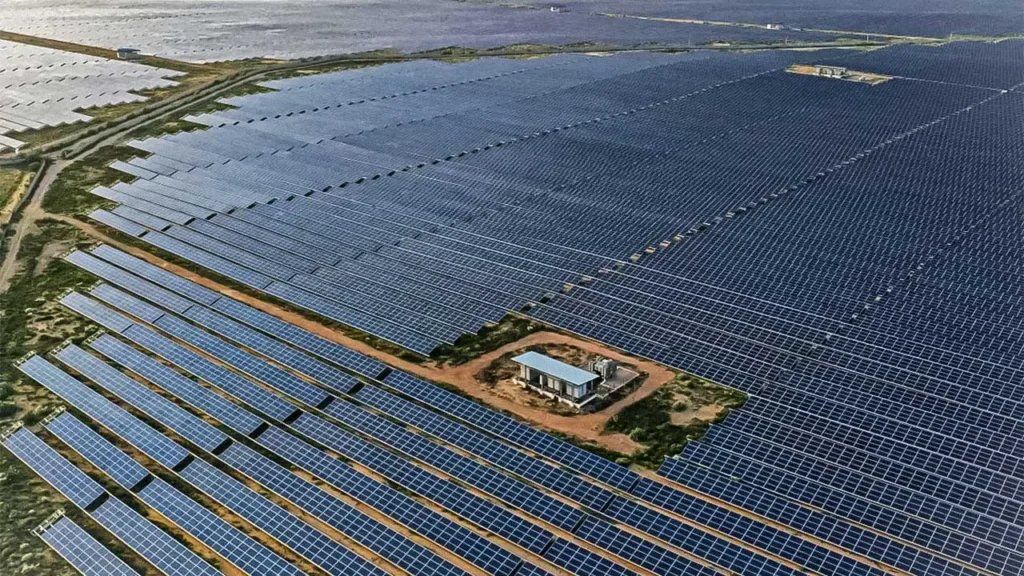
Bhadla Solar Park, Rajasthan.